 English
 Italiano
 Fran\xc3\xa7ais
 Svenska
Co-Presence Over Content: How Shared Virtual Worlds Are Rewriting Human Connection
Shared virtual experiences are restoring what digital life lost: real human connection through presence, emotion, and collective moments.
Modern digital life promised connection at scale, yet delivered isolation in disguise. People scroll endlessly beside millions of others, consume the same viral content, and react to the same moments — all while feeling profoundly alone. Interaction has been flattened into likes, comments, and fleeting attention. Presence has been replaced by passive consumption.
Virtual reality is quietly reversing that trend. Inside shared virtual environments, particularly social platforms like SwingersNest.com, experiences are no longer solitary. They are lived together. Instead of consuming content alone, people inhabit moments collectively, reintroducing something digital culture has steadily eroded: co-presence.
This shift is not technological — it is psychological. Humans do not bond over information. They bond over shared moments.
From Consumption to Co-Presence
Traditional social media is built around content. Users scroll, watch, react, and move on. Even live streams rarely feel reciprocal. The architecture encourages observation rather than participation.
Shared virtual worlds operate on an entirely different premise. There is no feed to scroll. There is no audience. There is only presence — the feeling of being somewhere with someone else.
In a virtual environment, two strangers watching the same sunset are not merely viewing pixels. They are sharing time. They notice the same sky shifting colors. They pause together. They react together. This simultaneous awareness creates a subtle but powerful emotional bond.
Co-presence transforms experience into memory.

Why Shared Moments Matter More Than Profiles
Digital platforms have trained people to present themselves through profiles, photos, and bios. These static representations reduce human identity to data points. Interaction begins with judgment rather than curiosity.
Shared virtual experiences invert this dynamic. People do not meet as profiles. They meet as participants.
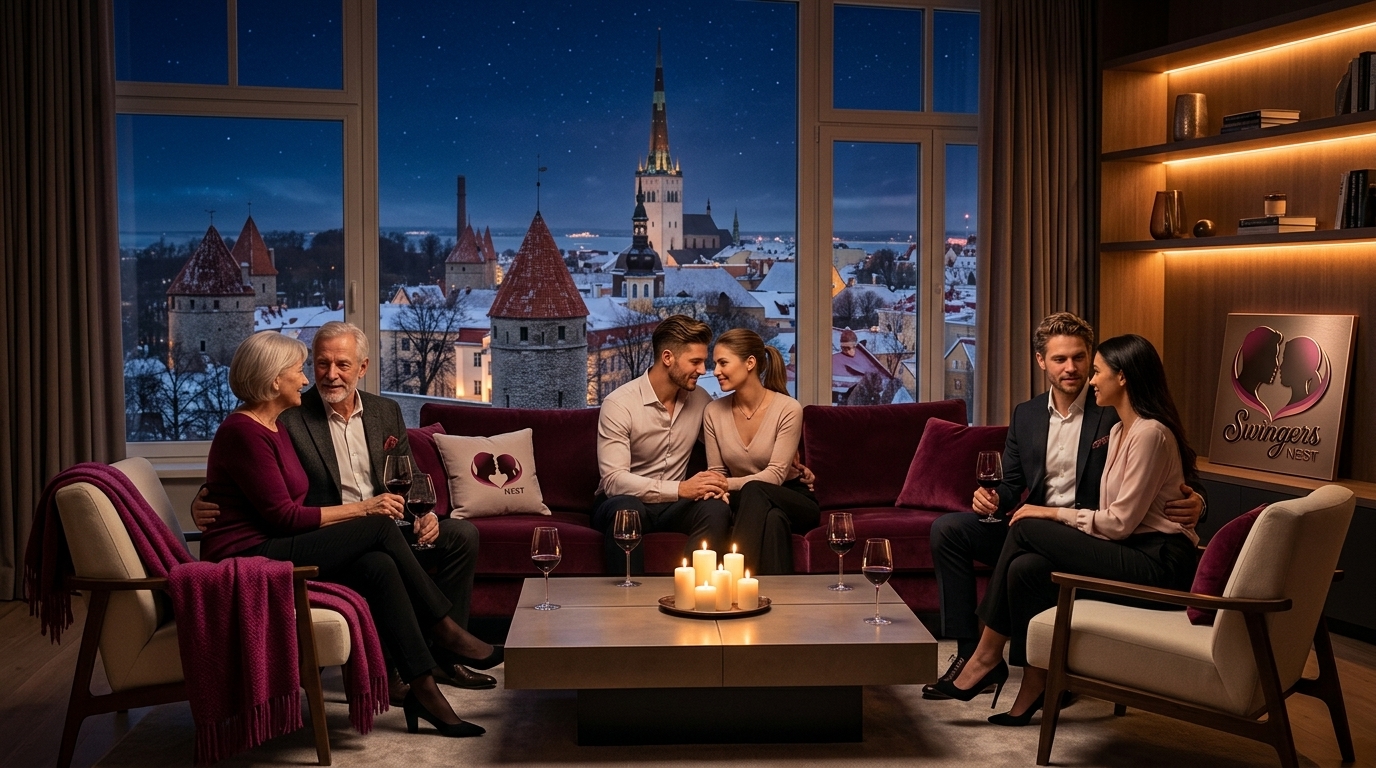
A small group standing on a virtual balcony under glowing lanterns does not begin by analyzing each other’s statistics. Conversation flows from the environment itself — the view, the music, the ambiance. The space becomes a social catalyst.
Psychologically, this mirrors how humans have bonded for thousands of years: through shared environments and collective attention.
People do not fall close because they exchanged information.
They grow close because they shared moments.
The Emotional Power of Virtual Co-Presence
One of the most underestimated aspects of VR is emotional realism. While the environment is digital, the feelings it generates are not.
A spontaneous dance inside a shared virtual room can produce genuine laughter. A quiet moment watching virtual lanterns drift upward can evoke calm and intimacy. These emotions linger long after the headset is removed because the brain encodes them as lived experiences.
Platforms like SwingersNest.com are designed around this principle. The focus is not on spectacle but atmosphere. Spaces encourage lingering rather than rushing, interaction rather than performance.
When people feel emotionally safe and present, bonding occurs naturally.
Shared Virtual Spaces as Social Memory Builders
Memory formation is deeply tied to emotion and context. In physical life, people remember trips, concerts, celebrations, and gatherings not because of what they consumed, but because of who they were with.
Shared virtual experiences replicate this mechanism. A virtual beach where friends watched the stars together becomes “that night we talked for hours.” A balcony conversation becomes “that place we always meet.”
These environments become emotional landmarks.
Unlike social feeds that reset endlessly, shared VR spaces accumulate meaning over time. Returning to them evokes familiarity and belonging, reinforcing long-term connection.
Why Virtual Togetherness Feels Safer Than Physical Spaces
For many people, physical social spaces carry anxiety: appearance concerns, social pressure, fear of judgment. Virtual environments soften these edges.
Avatars act as emotional buffers. They reduce self-consciousness and allow people to express curiosity, humor, and vulnerability more freely. This psychological safety makes shared experiences deeper rather than superficial.
In VR, people are not performing for strangers. They are simply present.
That presence — unfiltered and unhurried — is where authentic connection forms.
SwingersNest and the Architecture of Shared Experience
What sets platforms like SwingersNest.com apart is intentional design. Spaces are crafted to encourage interaction rather than distraction. Lighting, scale, sound, and spatial layout all contribute to emotional flow.
Instead of endless novelty, environments invite repetition. Instead of competitive attention, they foster shared focus.
This design philosophy recognizes a simple truth: connection does not require complexity. It requires time, proximity, and shared attention.
By creating infinite places where moments can bloom, SwingersNest enables relationships to develop organically.

The Future of Social Technology
As digital fatigue grows, people are seeking experiences that feel real again. Shared virtual worlds are not replacing physical connection — they are restoring the emotional mechanics behind it.
The future of social technology will not be about more content, faster feeds, or louder platforms. It will be about co-presence, emotional resonance, and shared memory.
People do not bond over profiles.
They bond over moments.
Virtual reality is reminding humanity how connection actually works.
Frequently Asked Questions (FAQ)
What are shared virtual experiences?
Shared virtual experiences are immersive digital environments where multiple people interact simultaneously, creating real-time social moments rather than consuming content alone.
Why do shared virtual spaces feel more meaningful than social media?
Because they emphasize presence and participation instead of observation, allowing emotional bonds to form naturally through shared moments.
Can virtual experiences create real emotional connections?
Yes. The brain processes shared virtual moments similarly to physical ones, especially when emotion, attention, and interaction are involved.
How does SwingersNest support shared experiences?
SwingersNest focuses on atmospheric environments, social flow, and emotional safety to encourage authentic interaction and lasting connections.
Is VR replacing real-world relationships?
No. VR complements real-world connection by providing accessible spaces for shared experience, especially when physical gathering is limited.
Related Articles


Where Curiosity Turns Into Chemistry
A private community for open-minded adults who value honesty, connection, and clear intentions.
Join Free Today