 English
 Italiano
 Fran\xc3\xa7ais
 Svenska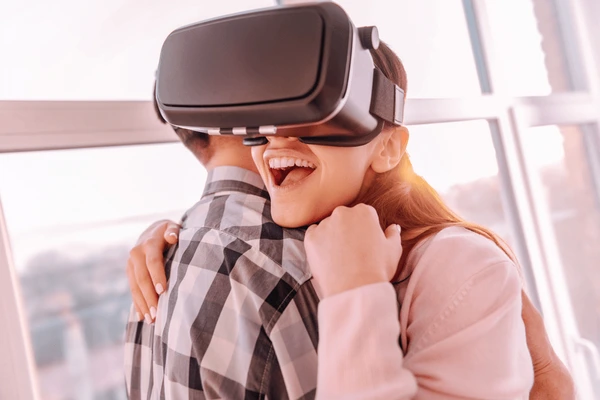
How Virtual Reality Is Helping People Heal From Rejection Trauma
Virtual reality offers a surprising path to healing rejection trauma by providing safe, consistent experiences of acceptance that help people trust connection again.
Rejection cuts deeper than most people admit. It isn’t just about a bad date, an unanswered message, or a relationship that didn’t work out. Over time, repeated rejection reshapes how people see themselves. It trains the nervous system to expect dismissal, silence, or humiliation before connection even begins.
For many adults, especially those returning to dating after long gaps, divorce, body changes, or emotional trauma, rejection becomes something to brace against rather than risk again. Dating stops feeling playful. Curiosity is replaced by caution. Desire gets buried under self‑protection.
This is where virtual reality (VR) is quietly changing the emotional landscape. Inside carefully designed social environments like SwingersNest VR, people are discovering something unexpected: a place where connection feels safe again.
Not perfect. Not fantasy. But warm, responsive, and human.
Rejection Trauma Lives in the Body, Not Just the Mind
Psychologists increasingly recognize rejection trauma as a nervous‑system injury, not simply low self‑esteem. When someone has experienced long‑term dismissal—being ignored, ghosted, passed over, or made to feel undesirable—the body learns to associate intimacy with threat.
This shows up as:
Tension when meeting new people
Overanalyzing social cues
Expecting abandonment before it happens
Emotional shutdown during flirting or dating
Avoidance disguised as independence
Even when someone wants connection, their body resists it.
Healing rejection trauma requires more than positive affirmations. It requires repeated, believable experiences of acceptance.

Why VR Works When Talk Therapy Stalls
Traditional healing tools—therapy, journaling, self‑help—are powerful, but they often stay cognitive. They help people understand their trauma without always giving the body new evidence.
VR does something different.
In immersive virtual environments, the brain responds as if the interaction is real. When someone laughs at your joke, holds eye contact, says your name with warmth, or invites you into a shared experience, the nervous system receives the same social safety signals it would in physical life.
Heart rate softens. Muscles relax. Defensive patterns ease.
VR becomes a bridge between knowing you’re worthy and feeling it again.
The Safety of Controlled Vulnerability
One of the most healing aspects of VR social spaces is control.
Users choose:
When to enter
How they present themselves
How long they stay
Who they engage with
When to disengage
This sense of agency is crucial for people with rejection trauma. Instead of feeling trapped or evaluated, they feel sovereign.
Inside SwingersNest VR, users describe the environment as emotionally gentle. Conversations unfold slowly. Curiosity replaces pressure. Flirting is exploratory, not demanding.
Because the stakes feel lower, people take emotional risks they’ve avoided for years.
Micro‑Moments That Rewire Belief
Healing doesn’t arrive as a dramatic breakthrough. It arrives in small, repeated moments:
Someone remembers your name
Someone asks a follow‑up question
Someone leans closer when you speak
Someone invites you to dance, explore, or talk longer
Someone mirrors your humor or energy
These moments may seem subtle, but for someone shaped by rejection, they are revolutionary.
Over time, users report an internal shift:
“I stopped assuming people weren’t interested.”
“I realized I didn’t have to perform to be liked.”
“I felt relaxed around attraction for the first time.”
The brain updates its predictions. The body releases its armor.
Unlearning the Belief That Dating Is Hostile
One of the most damaging effects of rejection trauma is the belief that dating itself is dangerous.
VR challenges that belief gently.
In spaces like SwingersNest VR, users encounter acceptance without immediate expectation. Attraction exists without coercion. Desire feels mutual instead of competitive.
People begin to associate dating energy with curiosity, warmth, and play rather than judgment.
This reframing doesn’t stay in VR.
Users often report improved confidence in real‑world interactions:
Less fear of initiating conversation
More emotional presence
Reduced sensitivity to perceived rejection
Greater trust in their own desirability
Not Escapism — Emotional Rehabilitation
Critics sometimes dismiss VR intimacy as avoidance. But users tell a different story.
VR isn’t replacing real relationships. It’s retraining people for them.
Just as physical therapy rebuilds strength before full movement returns, VR offers emotional rehab. It allows people to practice connection without re‑traumatization.
Importantly, VR doesn’t erase rejection trauma.
It replaces it with something more powerful: consistent experiences of being wanted.

The Role of Community in Healing
Healing accelerates in environments where people share similar emotional histories.
SwingersNest VR attracts individuals and couples who value consent, emotional intelligence, and curiosity over performance. This shared ethos creates psychological safety.
Users often say:
“I felt seen without explaining myself.”
“Nobody rushed me.”
“I didn’t feel behind or broken.”
Community normalizes healing.
What the Science Suggests
Neuroscience supports what users intuitively feel. The brain’s social bonding systems—oxytocin release, mirror neurons, emotional regulation pathways—activate through perceived presence, not physical proximity alone.
VR provides enough sensory input to engage these systems, allowing emotional learning to occur.
In simple terms: Your nervous system doesn’t care if the acceptance is virtual. It cares that it’s consistent.
A Gentle Way Back to Desire
Rejection trauma doesn’t mean someone is broken. It means they adapted.
VR offers a compassionate path forward. Not by forcing confidence, but by letting trust return naturally.
Slowly, users stop bracing for rejection. Slowly, their posture shifts. Slowly, curiosity replaces fear.
And in that space, desire feels safe again.
Frequently Asked Questions (FAQ)
Is VR emotional healing real or just imagined?
The brain responds to social cues in VR similarly to real life, making emotional learning genuine and lasting.
Can VR replace real relationships?
No. VR functions as preparation and rehabilitation, not replacement.
Is this only for people in alternative lifestyles?
No. Many users come for emotional safety, not sexual exploration.
How long does it take to feel a difference?
Many users report subtle shifts within weeks of consistent interaction.
Is VR safe for people with anxiety or trauma?
When environments emphasize consent and pacing, VR can be especially supportive.
Related Articles


Where Curiosity Turns Into Chemistry
A private community for open-minded adults who value honesty, connection, and clear intentions.
Join Free Today