 English
 Italiano
 Fran\xc3\xa7ais
 Svenska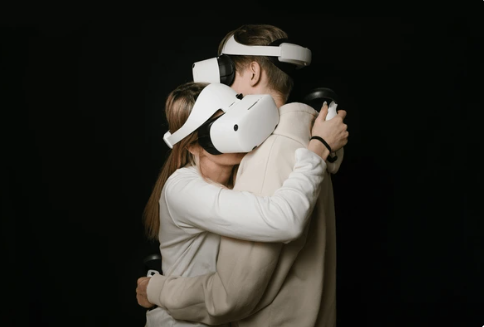
The Future of Connection: How Hybrid VR is Merging Online and Offline Realities
Hybrid VR dissolves the line between online and offline, creating a unified human experience.
For decades, humans have navigated two separate worlds: the digital realm and the physical world. Social media profiles, chat apps, and video calls created online personas that were often more curated, more polished, or even more guarded than real-life selves. Meanwhile, offline life demanded presence, emotional nuance, and real-time responsiveness. The divide between “online” and “offline” became normalized, but it was never natural. It was a product of limitations—technology that could transmit words and images but failed to capture the subtleties of human emotion.
Enter hybrid virtual reality (VR). Platforms such as SwingersNest.com are pioneering immersive experiences that merge the digital and physical in ways that feel profoundly real. Hybrid VR doesn’t just simulate human presence—it evokes it. When someone laughs beside you in VR, your brain registers it as it would in the real world. A gentle touch from an avatar triggers anticipatory warmth. A change in vocal tone affects your heartbeat. The old dichotomy of online versus offline begins to dissolve.

The Neuroscience of Presence
Human beings are wired to respond to presence. The human brain reacts not only to physical touch but to emotional signals conveyed by gestures, facial expressions, and tone of voice. Traditional online communication—text, emojis, or even video calls—can approximate these signals, but only imperfectly.
Hybrid VR, however, taps into deeper layers of human perception. When an avatar moves naturally, mirrors body language, or reacts to social cues, your brain processes these interactions as authentic. The result is emotional resonance: your nervous system responds as though you are physically with another person. This phenomenon is called social presence in VR research, and it’s a major step in bridging the online-offline gap.
By creating a sense of presence, hybrid VR transforms digital spaces from static, disconnected environments into immersive social landscapes where emotions, trust, and intimacy can flourish.
From Persona to Authentic Self
In online interactions, people often present a version of themselves shaped by expectation and social pressure. Offline life can demand yet another mask, filtered by social norms and anxieties. Hybrid VR allows the human self to emerge more naturally.
Avatars in VR are not masks—they are extensions of the self. They capture posture, movement, gaze, and expression in real time, providing an expressive canvas for emotions and personality. Users report feeling more authentic in VR than in video calls or text chats, because the technology removes the friction of judgment while preserving the immediacy of presence.
The implication is profound: people can communicate honestly, connect deeply, and experience companionship without the constraints of physical appearance, location, or social anxiety. Online and offline personas merge, creating a unified human experience.
Emotional Weight in the Digital Realm
One of the most striking consequences of hybrid VR is that digital interactions carry genuine emotional weight. A hand extended in VR, a smile, a whispered word—these gestures evoke real feelings. Unlike flat text or conventional video calls, VR interactions activate the body’s emotional systems, influencing heart rate, stress levels, and even hormonal responses.
This is why hybrid VR is being hailed as a transformative tool for social connection, dating, teamwork, and even therapy. It allows people to share meaningful experiences, celebrate milestones, and process emotions in ways that traditional digital platforms cannot. The boundary between “real” and “virtual” becomes irrelevant; what matters is presence, attention, and emotional resonance.

Implications for Society
Hybrid VR’s capacity to unify human experience has broader societal implications. Consider remote work: teams scattered across continents can collaborate in immersive spaces where gestures, tone, and spatial awareness enrich communication. Education can leverage VR to create classrooms where students interact naturally, not through screens or forums.
Even social bonds—friendship, romance, family connection—benefit. Hybrid VR reduces social anxiety, minimizes miscommunication, and fosters empathy. Humans are inherently social creatures; the technology simply restores a mode of connection that digital interfaces had long suppressed.
Challenges and Considerations
While hybrid VR promises a more integrated reality, challenges remain. Accessibility, cost, and technological literacy are barriers that need addressing. Additionally, ethical questions about privacy, consent, and digital boundaries must be considered. As the technology matures, society will need to balance immersive presence with responsible usage, ensuring that VR enhances human connection without replacing necessary real-world interactions.
FAQ
Q1: What is hybrid VR?
Hybrid VR is a technology that blends digital and physical experiences, creating immersive environments where users can interact with avatars that convey authentic emotional and social cues.
Q2: How does hybrid VR differ from traditional video calls?
Unlike video calls, hybrid VR captures body language, spatial orientation, and subtle emotional signals, allowing users to feel truly present with others.
Q3: Can hybrid VR replace face-to-face interaction?
Hybrid VR doesn’t replace physical presence but complements it, enabling meaningful connection across distances while preserving emotional richness.
Q4: Is hybrid VR safe for personal privacy?
Yes, when platforms implement strong privacy controls. Users control their presence, identity, and shared data, ensuring safe and respectful interactions.
Q5: Who can benefit from hybrid VR?
Anyone seeking more authentic social interaction online—remote workers, students, couples, friends, or individuals experiencing social anxiety—can benefit from hybrid VR experiences.
Hybrid VR is not just a technological novelty—it is the beginning of a new human reality. The division between online and offline is fading, replaced by a seamless, emotionally rich space where digital presence equals physical presence. In this emerging reality, humans can finally experience authenticity, connection, and presence across all dimensions of life.
Related Articles



Where Curiosity Turns Into Chemistry
A private community for open-minded adults who value honesty, connection, and clear intentions.
Join Free Today