 English
 Italiano
 Fran\xc3\xa7ais
 Svenska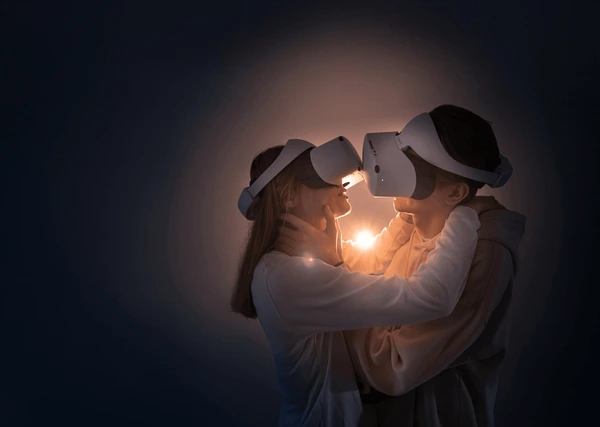
Virtual Reality Dating: How Immersive Experiences Are Reigniting Modern Romance
Virtual reality dating platforms are transforming online connections by replacing swipe fatigue with immersive, hopeful social experiences.
Dating fatigue has quietly become one of the defining emotional experiences of the digital era. Millions of people still want meaningful relationships, companionship, and romance—but the methods they rely on often leave them feeling drained instead of inspired. Endless swiping, repetitive small talk, ghosting, and mismatched expectations can make the search for connection feel less like an adventure and more like emotional labor.
The issue isn’t that people have lost interest in relationships. It’s that traditional digital dating tools often strip away the spontaneity, curiosity, and sensory richness that make human interaction exciting in the first place.
Now, a new technological shift is beginning to change that narrative: immersive virtual environments.
The Psychology Behind Dating Fatigue
Modern dating platforms are designed for efficiency. Profiles are reduced to photos and brief descriptions. Interactions start with text messages. Decisions happen in seconds. While convenient, this system unintentionally creates a cycle of micro-rejections and emotional friction.
Each swipe left can feel like dismissal. Each unanswered message can feel personal. Each promising conversation that fades can create disappointment. Over time, these tiny emotional hits accumulate into exhaustion.
Psychologists often describe this as decision fatigue combined with social uncertainty. The brain becomes overwhelmed by constant evaluation, comparison, and anticipation. Instead of feeling hopeful, users start expecting disappointment.
That expectation becomes self-reinforcing. When people assume interactions will fail, they invest less emotionally, which reduces authenticity—and that makes meaningful connection even less likely.

Why Immersive Worlds Change the Emotional Equation
Virtual reality environments flip the traditional dating model on its head. Instead of judging static profiles, people meet inside dynamic spaces designed for interaction. Rather than messaging first, they share experiences first.
This subtle shift changes everything.
In immersive environments, participants can:
Hear tone and emotion in real voices
Observe natural body language and movement
React in real time
Share activities instead of interviews
These cues are fundamental to human communication. For thousands of years, people built attraction through presence, not profiles. VR reintroduces that lost dimension.
When interaction feels natural instead of staged, pressure decreases. And when pressure decreases, curiosity increases.
Playfulness Restores Emotional Openness
One of the most powerful effects of immersive dating spaces is the return of playfulness. Traditional dating apps rarely feel playful; they feel evaluative. Profiles are judged. Photos are analyzed. Responses are scrutinized.
Virtual environments, by contrast, feel exploratory.
People might meet in a digital lounge, wander along a simulated beach, dance in a nightclub, or talk on a rooftop overlooking a neon skyline. These shared environments create a sense of occasion. The interaction becomes an experience rather than a test.
Play activates the brain’s reward system. It lowers anxiety, increases creativity, and makes people more receptive to connection. When individuals feel relaxed and curious instead of judged, they reveal more of their authentic personality.
Authenticity, in turn, is the foundation of attraction.
Presence Creates Trust Faster Than Text
Trust is difficult to establish through messages alone. Text removes facial expression, tone, timing, and physical cues—all of which humans instinctively rely on to evaluate sincerity.
Immersive interaction restores these signals.
When someone laughs naturally, pauses thoughtfully, or reacts spontaneously, those behaviors communicate emotional truth more effectively than any written message. Even when avatars are stylized, the human controlling them cannot fully mask their real reactions.
This is why many participants report feeling that virtual interactions are “more real” than traditional app conversations. The experience resembles meeting in person more than chatting online.
The Shift From Performance to Experience
Swipe-based dating encourages performance. Users carefully craft profiles, select flattering photos, and rehearse opening lines. While understandable, this performance mindset creates pressure to impress rather than connect.
Immersive environments shift focus from performance to participation.
Instead of asking, “How do I appear?” people start asking, “What do we do together?”
That difference is profound. Shared experiences—walking through a digital art gallery, playing games, exploring environments—naturally generate conversation topics. Silence feels comfortable rather than awkward because attention can rest on the environment as well as the interaction.
When conversation flows organically, emotional walls drop.
Hope: The Missing Ingredient in Modern Dating
What many users don’t realize they’ve lost is hope. After enough disappointing interactions, expectations shrink. People log in assuming nothing meaningful will happen. That assumption shapes behavior, tone, and openness.
Immersive dating experiences often reverse that emotional pattern.
Users frequently report feeling excited before entering virtual social spaces. The anticipation resembles attending a party or social gathering rather than checking messages. That emotional state primes the brain for positive engagement.
Hope is contagious. When participants enter interactions expecting possibility instead of rejection, they become more attentive, more expressive, and more responsive. Those qualities make connection more likely—creating a positive feedback loop.
A New Social Layer, Not a Replacement
It’s important to understand that immersive dating isn’t replacing real-world interaction. Instead, it’s adding a new layer between messaging and meeting in person.
Traditional dating flow:
Profile → Chat → Meet
Emerging immersive flow:
Profile → Meet in VR → Meet in person
That middle step acts as a bridge. It allows people to sense chemistry, personality, humor, and comfort before committing to a real-world meeting. As a result, in-person dates often feel less awkward and more natural.
The technology doesn’t replace reality—it prepares people for it.
Why This Trend Is Growing
Several factors are accelerating interest in immersive dating:
Remote socialization has become normalized
VR hardware is becoming more affordable
People are seeking alternatives to swipe culture
Younger generations value interactive experiences over static platforms
Most importantly, users are increasingly aware of their emotional well-being. They are beginning to choose platforms based not just on results, but on how the experience makes them feel.
If an environment leaves someone energized instead of drained, they’re more likely to return.

The Future of Connection
Human beings are experiential creatures. We bond through shared moments, not checklists. Technologies that recreate presence—even digitally—tap into ancient social instincts.
Immersive dating succeeds because it aligns with how humans naturally connect:
through voice, movement, timing, environment, and play.
As these platforms evolve, they may redefine what people expect from digital interaction altogether. Instead of tolerating dating apps, users may begin to seek out environments that make them feel alive, curious, and hopeful.
In that sense, the real innovation isn’t virtual reality itself.
It’s the return of emotional reality.
FAQ
1. What is virtual reality dating?
Virtual reality dating allows people to meet and interact inside immersive digital environments using avatars and real-time communication.
2. Does VR dating replace real-life dating?
No. It typically serves as a bridge between online chatting and meeting in person, helping people build comfort first.
3. Why do people feel less anxious in VR social spaces?
Immersive environments reduce pressure by shifting focus from evaluation to shared experience, which lowers social tension.
4. Is VR dating more effective than traditional apps?
Many users report stronger initial chemistry because they can observe voice, movement, and reactions instead of relying only on text.
5. Who benefits most from immersive dating platforms?
People who feel burned out by swipe culture, struggle with small talk, or prefer experiential interaction often benefit the most.
Related Articles



Where Curiosity Turns Into Chemistry
A private community for open-minded adults who value honesty, connection, and clear intentions.
Join Free Today